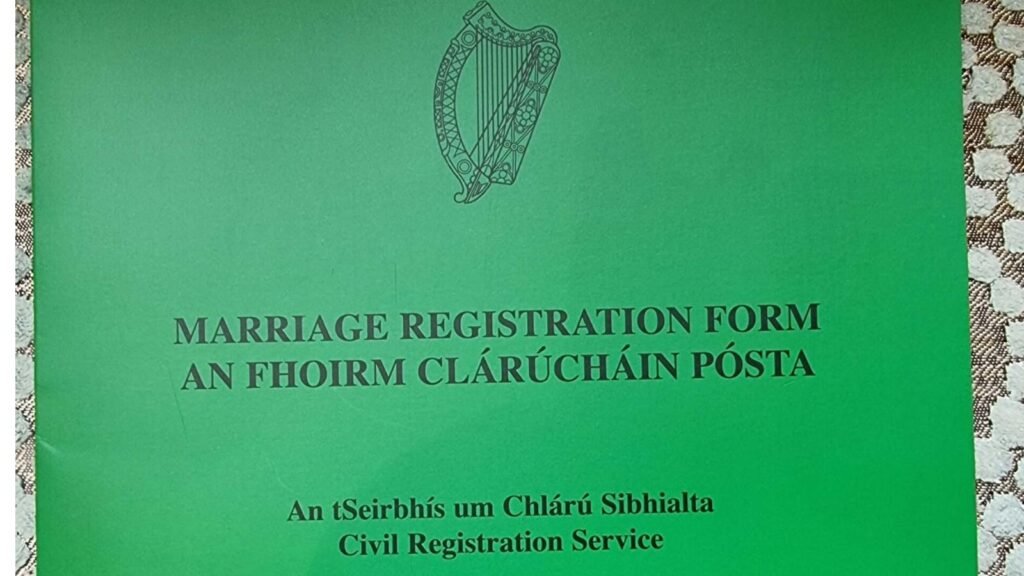
What It Is, Who Signs It, and How It Fits Into Your Wedding Day
The Marriage Registration Form (MRF) is referenced early in most wedding timelines, but its role is not always clearly understood at first. It is often described simply as “the form you sign on the day.” In reality, the MRF is the document that legally authorises your marriage to take place. Without it, a legal marriage cannot occur — regardless of how carefully everything else has been planned.
This article explains what the MRF does, when it is issued, who is responsible for it, and how it fits smoothly into your wedding day.
The MRF is one part of a wider legal sequence that begins long before the wedding day → Getting Married in Ireland: How the Legal Process Actually Works (How Everything Connects)
What the MRF Actually Does
The MRF has two essential legal functions.
First, it authorises the marriage to take place. The State will not recognise a marriage unless a valid MRF exists for that couple on that date.
Second, it records that the marriage has taken place. Once completed and returned, it allows the marriage to be entered into the State register.
Without a valid MRF:
a legal marriage cannot take place
the ceremony cannot be registered
the marriage has no legal standing
An MRF is issued only after the three-month notice appointment has been attended and all required documentation has been accepted.
This is why the notice appointment is so critical — without it, an MRF cannot exist → The 3-Month Notice Period Explained (Why Timing Matters So Much)
When and How the MRF Is Issued
After notice has been given and approved, the Civil Registration Service issues the MRF at your notice appointment. The key point is this:
The MRF exists before the wedding day and must be available at the ceremony. The solemniser cannot create, substitute, or bypass an MRF.
The information used to prepare the MRF comes directly from the earlier paperwork submitted at notice
→ The Data Capture Form Explained (Why Accuracy Early Matters Later)
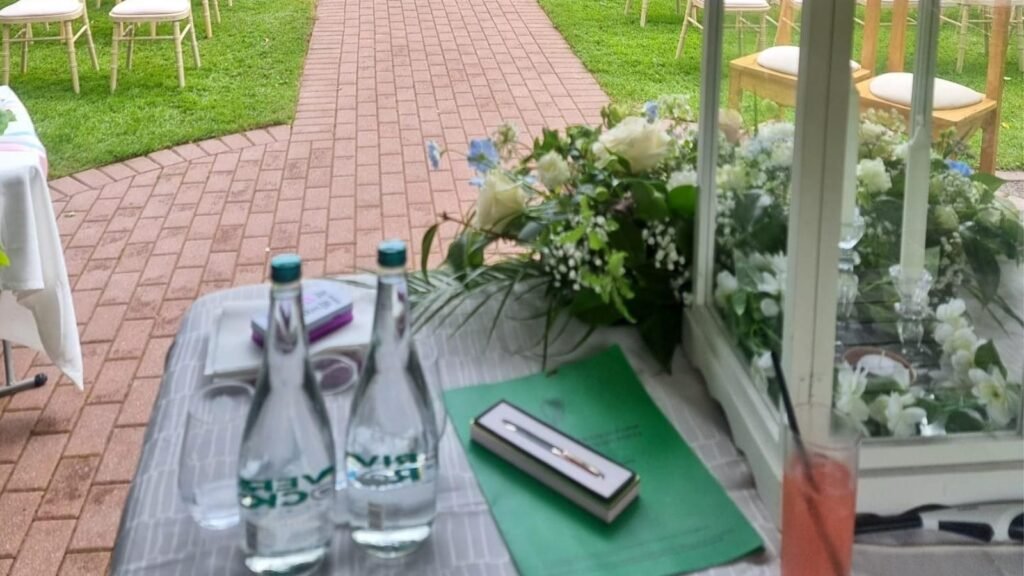
Who Receives the MRF (Who Is Responsible for It)
Solemniser-Led Ceremonies (Religious or Non-Religious)
Where a registered solemniser is conducting the ceremony:
the MRF is issued to the couple
the couple must bring it to the ceremony
After the ceremony, the completed Marriage Registration Form must be returned to the Civil Registration Service so the marriage can be registered.
This responsibility rests with the couple.
This division of responsibility is part of how solemniser-led ceremonies work
→ Working With a Solemniser (What’s Handled for You, and What Isn’t)
The solemniser will ensure the form has been completed correctly, but the couple must ensure it is returned promptly.
(In civil registrar-led ceremonies, this process is handled by the registrar and does not arise.)
Civil (Registrar-Led) Ceremonies
Where a State registrar is conducting the ceremony:
the registrar retains the MRF
they bring it to the ceremony
the couple do not need to manage it
The Six-Month Validity Rule
An MRF is valid for six months from the ceremony date stated on the form.
This becomes important if:
the wedding date changes
the ceremony is postponed
As a general guide:
a new date within the six-month window is usually acceptable
a new date beyond six months may require a new MRF, and possibly a new notice process
Before changing any dates, it is always wise to check with your solemniser.
Changes to dates or ceremony structure can also affect venue suitability
→ Where You Can Legally Get Married in Ireland
What Happens on the Wedding Day
The MRF is signed after the ceremony, or during it, once the required legal declarations have been made.
The form is signed by:
both partners
two witnesses (who must have been present for the full ceremony)
the solemniser
Accuracy matters. Names and signatures should match the details printed on the MRF, and any corrections must be clearly recorded and initialled.
This signing usually happens immediately after the ceremony, in a calm and structured moment.
Common MRF Issues (and How They Are Easily Avoided)
Most MRF-related issues are simple and preventable.
Forgetting to bring the MRF means the legal marriage cannot proceed. Storing it somewhere secure and obvious prevents this.
Signing with a name that does not match the MRF (for example, using a married name) can delay registration. The solution is simply to sign exactly as the name appears on the form.
Witnesses must be present for the entire ceremony. Choosing witnesses who will be in place from the beginning avoids last-minute changes.
If the MRF is lost or damaged before the ceremony, the Civil Registration Service should be contacted immediately. Photocopies or photographs cannot be used.
What Happens After the Wedding
Once the completed MRF has been returned and processed:
the marriage is entered into the State register
the couple can apply for an official marriage certificate
At present, the fee for a marriage certificate is €20. The MRF can be returned to any civil registration office. It does not matter where it was issued from.
Why the MRF Causes Unnecessary Anxiety
Confusion around the MRF often comes from:
informal language such as “the green folder”
venue staff not being involved in the legal process
well-meaning advice from friends
online information focused primarily on civil ceremonies
In practice, when guided properly, the process is straightforward.
For couples feeling overloaded by legal details, this page can help bring things back into order → Overwhelmed With Wedding Planning in Ireland? Start Here
The solemniser oversees the legal structure of the ceremony; the couple’s role is simply to ensure the MRF is present, signed correctly, and returned.
A Simple MRF Safety Plan
One week before the wedding: allow the solemniser to review the MRF
The day before: store it somewhere secure
On the wedding day: hand it to the solemniser early
With these steps in place, the MRF fades into the background and the focus remains on the ceremony itself.
The Bottom Line
The Marriage Registration Form is the document that transforms a ceremony into a legally recognised marriage.
Handled correctly, it causes no disruption and no stress. Handled casually, it can create avoidable complications.
Treat it like your passport on the wedding day: essential, protected, and handed over at the right moment — then forgotten while you enjoy everything that follows.
If you’re still early in planning and orienting yourself, this is a good place to begin → Just Engaged? Congratulations — Start Here
This article touches on themes explored more fully in my writing on ceremony and marriage, where the legal, practical, and human aspects of marriage are examined together.