What the Law Allows — and What Actually Works in Practice
Couples living outside Ireland often assume that getting married here is simply a matter of paperwork and timing. Legally, that is true. Practically, it is far more complex — especially once appointment availability, documentation checks, and travel logistics are factored in.
This article explains the real-world process for overseas couples, not just what is theoretically permitted. It is written to help you plan realistically and avoid the most common (and costly) misunderstandings.
If you want a full overview of how legal marriage in Ireland works from start to finish, begin here → Getting Married in Ireland: How the Legal Process Actually Works.
First: Who This Article Is Really For
When the HSE refers to couples “living overseas,” they are usually thinking of couples who are based a long distance away, such as:
the United States
Australia
Canada
New Zealand
parts of Asia or the Middle East
Couples living in the UK or mainland Europe are generally in a very different position. Short travel times and frequent flights mean they can usually attend a notice appointment in Ireland well in advance without difficulty.
The process described below exists for overseas couples — but it is not easy, automatic, or fast.
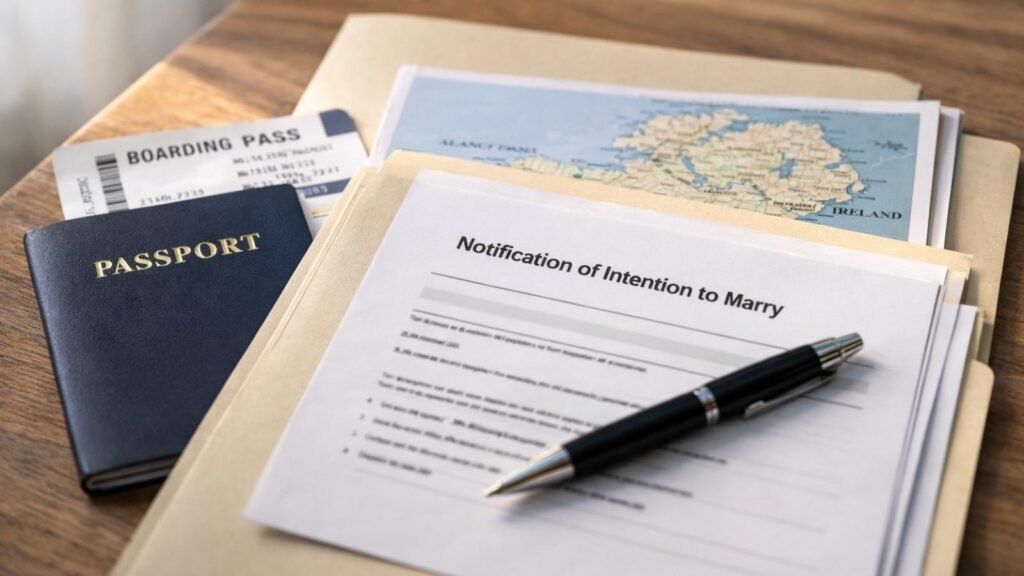
The Legal Baseline (What Must Happen)
Every couple marrying legally in the Republic of Ireland — civil, religious, or secular — must:
engage with the HSE Civil Registration Service
give valid Notification of Intention to Marry
attend an in-person appointment together before the wedding
This requirement applies to all couples, regardless of ceremony type. You can read more here → The 3-Month Notice Period Explained (Why It Catches So Many Couples Out).
There is no exception to the in-person meeting. The only flexibility is when that meeting occurs.
The “Notice by Post” Option — What It Really Means
Yes, there is a provision that allows couples who live far outside Ireland to lodge their notice documentation by post and attend the in-person meeting much closer to the wedding date.
However, this is important:
This is not a standard pathway.
It is discretionary, tightly controlled, and usually granted only where early travel to Ireland is genuinely impractical.This is where many couples misunderstand the law — the distinction is explained further here → Common Legal Mistakes Couples Make When Getting Married in Ireland.
In practice:
permission must be requested from the Civil Registration Service
approval is not guaranteed
additional documentation scrutiny is common
timelines are not shortened — only rearranged
For many couples, this process takes months, not weeks.
The In-Person Appointment Still Happens — and It Is Critical
Even where notice is lodged by post, both partners must still:
travel to Ireland
attend the appointment together
present original documentation
Where notice has been accepted by post, the in-person meeting may take place up to 5 days before the wedding, but this depends on:
registration office availability
weekday opening hours
the complexity of your documentation
the registrar’s assessment on the day
This is not something you should plan tightly around flights or arrival times.
What actually happens at this appointment is explained here → What Actually Happens on the Wedding Day (Legally Speaking).
The Reality of Appointment Availability
This is where theory and reality diverge most sharply.
Even for couples living in Ireland, notice appointments can:
book out 4–6 months in advance
be limited to certain days per week
vary significantly by region and season
For overseas couples, this means:
you cannot assume an appointment will be available when you need it
you cannot assume flexibility near the wedding date
you cannot safely plan on “we’ll sort the notice when we arrive”
This is why short timelines are risky.
This same issue affects couples living in Ireland too — particularly in peak season → The 3-Month Notice Period Explained (Why It Catches So Many Couples Out).
A Realistic Planning Horizon (Not the Legal Minimum)
Legally, notice must be lodged no less than three months before the wedding.
Practically, overseas couples should plan on:
12 -24 months from first contact to wedding day
early engagement with the Civil Registration Service
building in buffer time for appointments, documents, and corrections
Seven or eight months is not a safe planning window, even though it may appear so on paper.
This gap between what is legally possible and what actually works comes up repeatedly — see → How the Legal Process Actually Works in Practice.
Why This Feels So Misleading Online
Social media and venue marketing often show symbolic ceremonies without explaining the legal context → Do You Need Two Ceremonies? Legal vs Symbolic Marriage Explained.
Most official guidance focuses on:
minimum legal timelines
ideal scenarios
local access assumptions
What it does not reflect is:
real appointment shortages
international document delays
the fact that weddings run on fixed dates
As a result, couples often discover too late that while something is technically allowed, it is no longer logistically possible.
The Practical Advice I Give Overseas Couples
In plain terms:
If you live in the UK or Europe → plan to attend notice in Ireland early
If you live long-haul → assume the process will be slower and stricter
Start the process as soon as a wedding date is even tentatively chosen. An experienced registered solemniser can also help flag legal timing issues early → Who Can Legally Marry You in Ireland (and Who Can’t).
Do not rely on the notice-by-post pathway unless advised directly by the HSE
Early planning gives you options. Late planning removes them.
The Bottom Line
Ireland does provide a mechanism for overseas couples to marry legally here. But that mechanism is designed for exceptional circumstances, not convenience.
If you are living far from Ireland, the safest assumption is this:
If you want certainty, build time into the process — a lot of it.
When couples plan realistically, the legal process becomes manageable. When they plan based on minimums, it becomes stressful very quickly.
If you want certainty rather than assumptions, start with the full legal roadmap here → Getting Married in Ireland: How the Legal Process Actually Works.
This article touches on themes explored more fully in my writing on ceremony and marriage, where the legal, practical, and human aspects of marriage are examined together.