What It Is, Why It Matters, and How to Get It Right
When couples talk about giving notice to marry in Ireland, most focus on the appointment itself. Far fewer understand the importance of the Data Capture Form, even though it plays a central role in whether notice can be accepted and a Marriage Registration Form (MRF) issued.
The Data Capture Form is not just administrative paperwork. It is the document that sets out, in writing, the legal details of your intended marriage. Errors or misunderstandings here are one of the most common reasons notice appointments become delayed or incomplete.
This article explains what the Data Capture Form is, what information it contains, how it is used by the Civil Registration Service, and how to avoid the most common problems.
The Data Capture Form sits within the wider legal process of getting married in Ireland — and it connects directly to notice, venue, and the Marriage Registration Form → Getting Married in Ireland: How the Legal Process Actually Works (How the Pieces Fit Together)
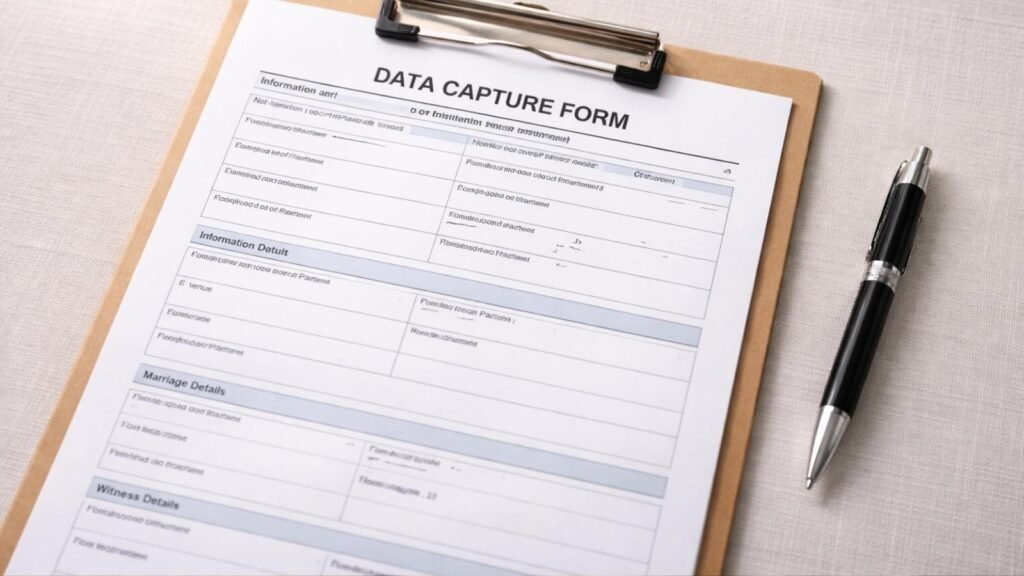
What Is the Data Capture Form?
The Data Capture Form is a document issued by the Civil Registration Service (HSE) as part of the marriage notification process.
It records, in advance of your appointment, the key legal details of your intended marriage, including:
-
The identities of both parties
-
Your civil status
-
Your intended ceremony type
-
The proposed date and venue of the marriage
-
The person who will solemnise the marriage
-
The intended witnesses
It allows the registrar to assess, before or during your appointment, whether the legal requirements for marriage are likely to be met.
You can see the Civil Registration Service official guidance on marriage notification and the Data Capture Form here:
Civil Registration Service – Data Capture Form
When Do You Complete the Data Capture Form?
The timing depends on your circumstances:
Couples living in Ireland
In most cases:
The Data Capture Form is provided to you after you contact the Civil Registration Service to book your notice appointment
You complete it in advance and bring it with you to the appointment
- Whether you fill it out or not, it gives you all the information that they will require from you
Couples living overseas
Where permission is granted to lodge notice by post:
The Data Capture Form is completed and returned as part of the postal notification process
Original documentation is then presented later at the in-person appointment (which may take place close to the wedding date)
In all cases, the form must be completed before notice can be accepted.
This is why timing matters — notice is not considered given until both the form and the in-person appointment are complete
→ The 3-Month Notice Period Explained (When the Clock Really Starts)
What Information Does the Form Ask For?
The Data Capture Form typically includes:
Personal details
Full legal names (exactly as per birth certificates)
Dates and places of birth
Current addresses
Nationalities
Civil status
Confirmation that each party is free to marry
Details of any previous marriages or civil partnerships
Divorce or dissolution information where applicable
Ceremony details
Intended date of marriage
Venue name and address
Ceremony type (civil / religious / secular)
Name and registration details of the solemniser
If you’re unsure whether a venue is legally suitable, it’s important to clarify this before completing the form
→ Where You Can Legally Get Married in Ireland
Witness details
Names of the two intended witnesses
(These can usually be changed later, but they must be legally eligible)Both witnesses must be over 18 on the day of the wedding ceremony
Why Accuracy Matters So Much
The information on the Data Capture Form feeds directly into the legal process.
The information you provide should be accurate as errors or inconsistencies can result in:
Notice not being accepted on the day
Requests for additional documentation
Delays in issuing the Marriage Registration Form
In serious cases, postponement of the legal wedding
Common issues include:
Using shortened or informal names
Mismatch between names on passports and birth certificates
Incorrect venue descriptions
Listing someone as solemniser who is not registered
- Not knowing whether your ceremony is civil, religious or secular
Small details matter because marriage is a legal act, not just an event.
For couples who are already feeling overloaded by legal details, this is a calm place to reset
→ Overwhelmed With Wedding Planning in Ireland? Start Here
Common Misunderstandings
“It’s just a form — we can fix it on the day”
Not always. Some errors can be corrected at the appointment; others cannot.
“The venue will sort that”
Venues do not handle legal paperwork. This is the couple’s responsibility.
“The solemniser doesn’t matter yet”
The solemniser’s legal status does matter at this stage, particularly for non-civil ceremonies. You do need to have your solemniser booked before you make your appointment.
The reason this matters is that only certain people are legally authorised to solemnise a marriage
→ Choosing a Solemniser in Ireland: Who Can Legally Marry You
“Witness names are locked in”
Witnesses can usually be changed later, but they must be eligible and present on the day.
Changes After the Form Is Submitted
The data capture form forms the basis for the information that will populate the Marriage Registration Form (MRF).
Life happens, and plans change. Some updates are usually possible, but always check before assuming.
Generally:
Witness changes → usually straightforward
Venue changes → must still meet legal requirements
Ceremony type changes → may affect venue suitability and process
Significant changes should be discussed with:
The Civil Registration Service
Your solemniser
Do not assume changes are automatically acceptable.
How the Data Capture Form Links to the MRF
Once notice is accepted:
The information from the Data Capture Form is used to prepare the Marriage Registration Form (MRF)
Errors at this stage can carry through to the MRF
That is why accuracy early prevents stress later
Think of the Data Capture Form as the blueprint for the legal marriage.
That blueprint is then used to prepare the formal legal document signed on the wedding day
→ The Marriage Registration Form (MRF) Explained (What It Is and Why It Matters)
Practical Tips That Make This Easier
Complete the form slowly and carefully
Use documents (passport, birth cert) while filling it in
Confirm the exact venue name and address
Confirm your solemniser’s registered details
Ask questions early if anything is unclear
Rushing this form creates far more work later.
The Bottom Line
The Data Capture Form is one of the least talked-about parts of getting married in Ireland — and one of the most important.
It is not a formality. It is the written foundation of your legal marriage.
When completed carefully, it allows the notice appointment to run smoothly, the MRF to be issued without delay, and the wedding day to proceed with confidence. When treated casually, it can introduce unnecessary stress into an otherwise well-planned process.
Understanding it early is one of the simplest ways to make the entire legal side of marriage in Ireland feel calm, clear, and under control.
If you’re early in planning and still orienting yourself, this page can help
→ Just Engaged? Congratulations — Start Here
This article touches on themes explored more fully in my writing on ceremony and marriage, where the legal, practical, and human aspects of marriage are examined together.