Why This One Choice Shapes How Your Ceremony Feels
When couples start planning a wedding in Ireland, they usually focus on the visible parts first: the venue, the date, the guest list, the celebration afterwards. The ceremony itself is often assumed to “come together” once the legal boxes are ticked.
In reality, the person you choose to solemnise your marriage has a profound impact not just on whether the marriage is legal — but on how the ceremony feels in the room.
This article explains what a solemniser actually does, how different approaches affect the ceremony experience, and why this choice often determines whether the ceremony is simply part of the day or the heart of it.
This role sits within a wider legal framework that applies to every marriage in Ireland
→ Getting Married in Ireland: How the Legal Process Actually Works
What a Solemniser Actually Is (and Isn’t)
In Irish law, a solemniser is a person registered with the State to legally conduct marriages. That legal authority applies across religious, interfaith, and non-religious ceremonies.
A solemniser is not:
A venue coordinator
A registrar’s assistant
A symbolic celebrant
Someone who simply “reads a script”
A solemniser carries legal responsibility for:
Solemnising your wedding
Confirming venue suitability
Overseeing the legal declarations
Ensuring the Marriage Registration Form (MRF) is correctly signed
Legal authority can always be verified independently
→ The Register of Solemnisers Explained (What It Confirms — and What It Can’t Tell You)
That legal role is essential — but it’s only part of the picture.
Where the Real Difference Appears: How the Ceremony Feels
All legal ceremonies must meet the same legal requirements.
What differs dramatically is how much freedom, warmth, and personal expression is possible within that framework.
Some solemnisers — particularly those operating within strict religious doctrines — work to a fixed structure. Couples may be offered:
A limited set of approved readings
Prescribed wording
Fixed ceremony flow
Little or no scope for personal storytelling
For couples who want a formal, traditional structure, that can feel reassuring and appropriate.
For others, it can feel distant, scripted, or disconnected from who they are.
Other solemnisers — including interfaith and non-doctrinal religious solemnisers — work very differently.
In those ceremonies:
The couple’s story shapes the structure
Language is chosen intentionally, not by default
Music, readings, and rituals are selected because they mean something
The legal elements are woven in, not bolted on
The ceremony still meets every legal requirement — but it feels human, present, and personal.
This is often the difference couples feel most strongly on the day
→ What Your Wedding Ceremony Can Feel Like
Ceremony Planning Is Not Standard (and Many Couples Don’t Realise That)
One of the biggest surprises for couples is discovering that not all solemnisers actively help you plan your ceremony.
Some will:
Provide a template
Ask you to choose from a short list
Finalise details close to the day
Others take a much more collaborative approach — spending time understanding:
What matters to you
The tone you want to set
The people in the room
What you want guests to feel, not just hear
That difference is rarely explained upfront, but it has a huge impact on the experience.
Understanding how the ceremony is planned in advance removes much of the uncertainty
→ What Actually Happens on the Wedding Day (Legally Speaking)
Availability Matters More Than Couples Expect
Another difference between types of solemnisers only becomes visible once dates, venues, and timelines are being discussed: availability.
Not all registered solemnisers operate with the same flexibility when it comes to:
Days of the week
Times of day
Venue choice
Travel distance
This isn’t about commitment or professionalism — it’s about how different roles are structured.
Fixed-Schedule Solemnisers
Some solemnisers — particularly those attached to churches or registry offices — work within defined schedules.
That can mean:
Limited availability on certain days (often weekdays or specific weekends)
Fixed ceremony times
Set locations only (churches, registry offices, designated rooms)
Little flexibility if timings shift on the day
For couples whose plans fit neatly within those structures, this works well.
For others, it can quietly narrow options.
Flexible-Schedule Solemnisers
Other registered solemnisers operate with much greater flexibility.
They may be available for:
Weekdays or weekends
Morning, afternoon, or evening ceremonies
A wide range of venues chosen by the couple
Outdoor or estate settings approved through the solemniser
This flexibility often becomes important when couples want:
A specific venue that doesn’t align with fixed schedules
A later ceremony time to suit guests or photography
A ceremony that flows naturally into the rest of the day
It’s not unusual for couples to realise late in planning that their preferred ceremony time or location doesn’t align with the solemniser they initially assumed they would use.
This often overlaps with venue suitability and timing considerations
→ Wedding Venues and Legal Marriage in Ireland: What Actually Matters
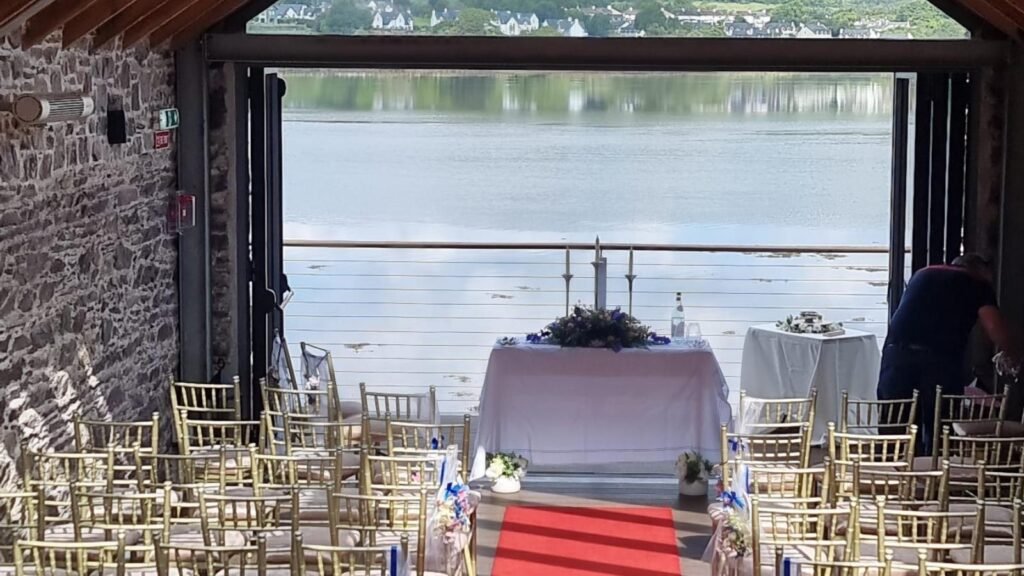
Why This Links Directly to How the Ceremony Feels
Practical constraints shape emotional experience.
When a ceremony is rushed to fit a timetable, moved to a less suitable space, or scheduled at an awkward time simply to meet availability, couples feel it — even if they can’t quite name why.
When timing, venue, and ceremony flow are aligned:
The room feels calmer
The couple feels more present
Guests settle more naturally
The ceremony sets the tone instead of feeling like a formality to “get through”
That alignment usually starts with choosing a solemniser whose working style matches your vision, not just one who can legally sign the paperwork.
A Quiet Question Worth Asking Early
One simple question early in planning avoids most of these issues:
“Are you available on our date, at our venue, and at the time we’re hoping for?”
Not all solemnisers can say yes to all three — and that’s okay.
What matters is knowing early, so your ceremony vision and legal reality stay aligned.
Many couples reach this question while still finding their feet
→ Overwhelmed With Wedding Planning in Ireland? Start Here
How This Fits With My Own Approach
In my own work, flexibility is part of the service. I work across different days, times, and venues, once they meet legal suitability, so the ceremony can be planned around the couple — not the other way around.
That flexibility allows us to focus on what the ceremony is meant to be:
unrushed, present, and genuinely meaningful.
For many couples, that practical freedom is what allows the ceremony to become the best part of the day — rather than something fitted in between other priorities.
Many couples worry about nerves or awkwardness. My approach is shaped by both experience and formal training in voice and public speaking, which allows the ceremony to feel steady, natural, and unforced.
Legal Confidence Creates Emotional Freedom
When the legal side is handled confidently, it creates space for something else to happen.
Couples who feel secure about the legal framework tend to:
Relax sooner in the ceremony
Be more present with each other
Engage emotionally with the moment
Feel genuinely supported rather than “processed”
A good solemniser ensures that:
The law is respected
The paperwork is correct
The structure is sound
So that the ceremony itself can breathe.
That confidence comes from knowing the legal steps are being handled correctly
→ The Marriage Registration Form (MRF) Explained
On the Day: The Ceremony Sets the Tone
Many couples later say the same thing:
“Once the ceremony felt right, the rest of the day just flowed.”
That’s not accidental.
The ceremony is where everyone arrives — emotionally as well as physically.
It’s where nerves settle, families soften, and the day truly begins.
Personally, I would be disappointed if the ceremony was not the best part of the day.
Not the longest.
Not the loudest.
But the most meaningful.
When the ceremony is well-crafted, guests listen. They laugh. They tear up. They feel connected — not just to the couple, but to each other.
That moment carries forward into everything that follows.
A Personal Note (By Way of Context)
In my own case, I am a registered solemniser aligned to an interfaith religious body. That framework allows me to work with couples from all backgrounds — religious, mixed-belief, or non-religious.
The legal requirements are handled with care and clarity, while the ceremony itself is shaped around the couple, their families, and what matters to them. We take the time to plan the ceremony intentionally, so it reflects who you are rather than forcing you into a pre-set mould.
For many couples, that balance is what makes the process feel calm rather than complicated — and the ceremony feel like theirs.
The Takeaway
Every legal marriage in Ireland follows the same law.
But not every ceremony feels the same.
Your choice of solemniser determines:
How much freedom you have
How personal the ceremony becomes
Whether the legal elements fade quietly into the background
How present and connected the room feels
When chosen well and involved early, a solemniser doesn’t just marry you legally — they help create the moment where everything else begins.
If you’re still early in planning and exploring options, this page can help orient you
→ Just Engaged? Congratulations — Start Here
This article touches on themes explored more fully in my writing on ceremony and marriage, where the legal, practical, and human aspects of marriage are examined together.