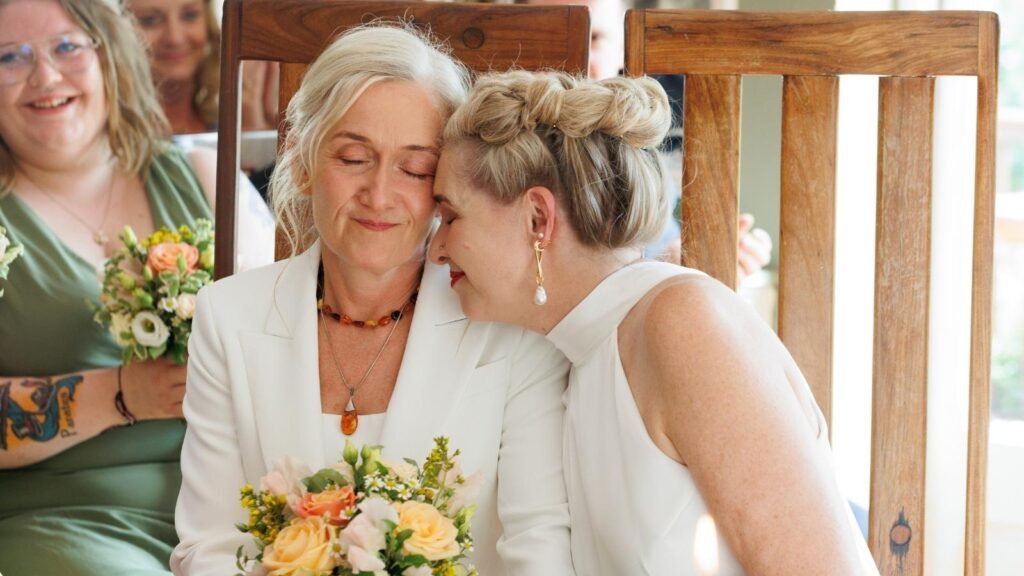
(And Why That Matters More Than You Think)
When couples talk about their wedding afterwards, they rarely talk about paperwork, venues, or schedules.
They talk about how the ceremony felt.
Whether it felt warm or stiff.
Personal or generic.
Relaxed or overly formal.
Like them — or like something they were dropped into.
And yet, many couples don’t realise how much influence they actually have over this part of the day.
What many couples don’t realise is that Irish marriage law only defines what must happen legally — not how the ceremony should feel → Getting Married in Ireland: How the Legal Process Actually Works (What’s Required vs What’s Optional)
There Is No Single “Right” Way for a Ceremony to Feel
A wedding ceremony in Ireland does not have to be:
solemn and formal
religious in tone
scripted from a fixed template
short and rushed
emotionally distant
It can be those things — if that’s what you want.
But it can also be:
warm and conversational
calm and grounded
light-hearted and joyful
reflective and intimate
centred on your story, not a structure
Irish marriage law sets out what must happen legally, not how the ceremony should feel emotionally.
That difference is important.
That distinction — between legal structure and emotional experience — is often misunderstood → Legal vs Symbolic Marriage in Ireland Explained (And Why the Difference Matters)
Why Ceremony Experience Is Often Overlooked
Most couples plan in this order:
Venue
Date
Guests
Music
Everything else
The ceremony often comes later — assumed rather than designed.
In some settings, couples are offered:
a fixed script
a short list of readings
limited flexibility around tone or structure
That works well for some people.
For others, it leads to a ceremony that feels fine — but not memorable.
Ceremony Design vs Ceremony Delivery
There’s a difference between:
delivering a ceremony
and designing one
Designing a ceremony means thinking about:
pace
tone
language
moments of pause
laughter, stillness, connection
It’s the difference between:
“We got through the ceremony”
and
“That was the best part of the day.”
Flexibility Changes the Experience
Different solemnisers work in different ways.
Some are bound by:
specific structures
set language
particular days, times, or venues
Others work more flexibly — across:
indoor and outdoor spaces
different days of the week
varied ceremony styles
mixed-belief or non-religious couples
That flexibility doesn’t just change logistics — it changes how relaxed the entire experience feels.
Much of that flexibility comes down to how you work with your officiant → Working With a Solemniser (What Actually Shapes the Ceremony Experience)
When couples aren’t trying to fit into a ceremony, the ceremony can finally fit them.
A Note From Me
In my own case, I work with couples who want the ceremony to feel:
genuine
unforced
personal
and reflective of who they are
I’ll always say this openly:
I would be disappointed if the ceremony was not one of the highlights of your day.
Not because it needs to be grand — but because it should feel true.
When the ceremony lands well, everything that follows feels lighter.
The Quiet Truth
Your ceremony sets the tone.
Not just for the day — but for how the day is remembered.
When it feels right, people lean in.
When it feels rushed or generic, people endure it.
You’re allowed to care about this part.
You’re allowed to shape it.
And you’re allowed to choose someone who helps it feel the way you want it to feel.
If you’re still early in the process, this is often the most helpful place to begin
→ Just Engaged? Congratulations — Start Here
This article touches on themes explored more fully in my writing on ceremony and marriage, where the legal, practical, and human aspects of marriage are examined together.