And How to Shape It So It Feels Comfortable, Not Intimidating
For many couples, the ceremony is the part of the wedding they feel most unsure about — not because they don’t care, but because it feels deeply personal and very public at the same time. They know how church ceremonies usually look, they may have attended a few civil ceremonies, but when it comes to imagining their own, there’s often a quiet question underneath it all: “What will this actually feel like for us?”
That uncertainty is completely normal. Standing in front of the people you love, sharing a moment that matters, can feel exciting and intimidating all at once. Some couples worry about nerves, others about emotions, and many simply don’t want the ceremony to feel stiff, awkward, or overly formal. The truth is, a wedding ceremony doesn’t have to feel like a performance. When it’s shaped with care, it can feel calm, natural, even surprisingly joyful — a moment where the nerves fade and what’s left is connection, warmth, and relief.
Much of that reassurance comes from understanding that there is a clear structure underneath the ceremony, even when it feels relaxed
→ What Actually Happens on the Wedding Day (Legally Speaking)
“We Don’t Know What We’re Supposed to Do” — And That’s Normal
One of the most common things couples say is simply:
“We don’t know how this works.”
That uncertainty is common, especially early in planning
→ Just Engaged? Congratulations — Start Here
Church ceremonies come with a fixed structure. Civil ceremonies are often brief and procedural. When you move outside those frameworks, it can feel as though you’re suddenly expected to invent something meaningful from scratch — while also standing in front of everyone you know.
That can feel daunting.
The truth is that modern wedding ceremonies are not blank pages. They’re made up of familiar elements that can be arranged, simplified, or softened depending on who you are and how you want the day to feel.
Once couples understand that, the pressure eases almost immediately.
A Ceremony Is Not a Performance
A common fear — especially for people who dislike public attention — is that the ceremony will feel like being put on display.
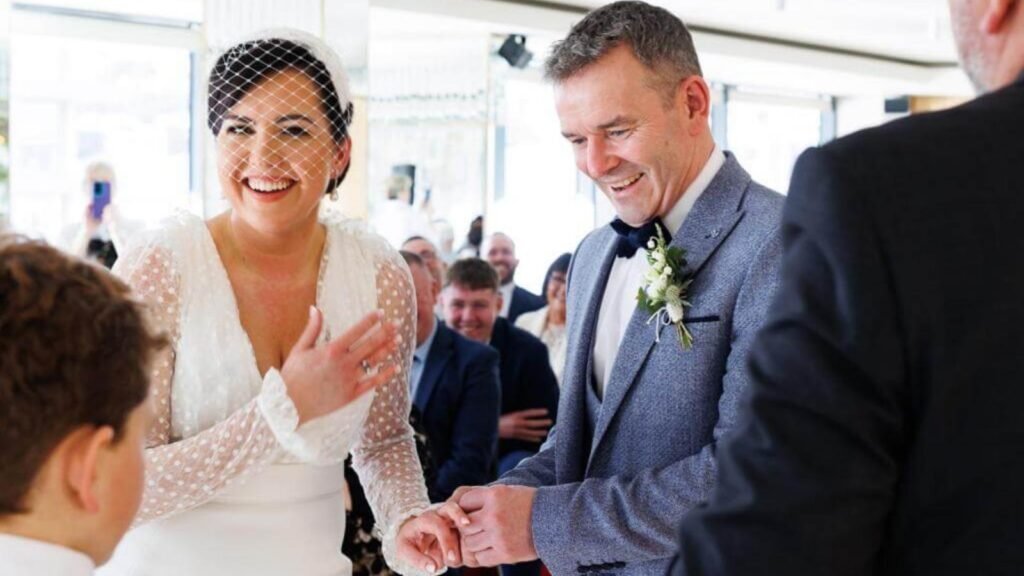
In reality, a well-shaped ceremony doesn’t feel like a performance at all. It feels like a shared moment that gently carries you through.
Some people love being the centre of attention. Others would rather keep things understated. Both are completely valid, and both can be accommodated in how a ceremony is designed.
You don’t have to:
speak for long periods
read personal vows aloud if that doesn’t suit you
stand in silence while everyone watches
feel emotionally exposed
A ceremony can be calm, guided, and contained — with the focus naturally moving between you, the people around you, and the meaning of what’s happening.
My background includes formal training in voice and public speaking, which helps me guide ceremonies with calm pacing and presence rather than performance.
This is helped enormously when the ceremony is intentionally designed rather than improvised
→ Working With a Solemniser (What Shapes the Ceremony Experience)
Understanding the Building Blocks Makes Everything Easier
Most ceremonies — regardless of style — are made up of a small number of short elements:
a welcome that gathers everyone together
the legal declarations (where required)
reflection or storytelling
vows or promises (spoken, repeated, or kept simple)
the exchange of rings
optional readings or rituals
a closing moment
When couples see a ceremony as a series of brief, purposeful moments rather than one long event, it becomes far less intimidating.
Nothing has to be long. Nothing has to feel forced. And very little has to be done by you unless you want it that way.
Those elements exist in every legal ceremony, regardless of style
→ Getting Married in Ireland: How the Legal Process Actually Works
Including People Without Creating Pressure
Many couples want to include parents, children, or friends, but worry about creating awkwardness or tension.
Inclusion doesn’t have to mean handing someone a microphone. It can be:
a short reading
a symbolic role
standing with you for a moment
being acknowledged and thanked
Children can be included gently. Parents can be honoured without formality. Friends can be part of the ceremony without it becoming a production.
When inclusion is planned thoughtfully, it adds warmth rather than pressure.
This kind of thoughtful pacing is part of shaping how the ceremony feels
→ How Your Wedding Ceremony Can Feel (And Why That Matters More Than You Think)
There Is No “Right” Way for a Ceremony to Feel
Some ceremonies are light and relaxed. Some are formal and reflective. Some are emotional; others are calm and contained.
What matters is not how the ceremony looks from the outside, but how it feels to the people standing at the centre of it.
Many couples know what they don’t want — too stiff, too impersonal, too awkward — long before they can articulate what they do want. That clarity usually emerges through conversation rather than decision-making.
Where a Solemniser Makes the Biggest Difference
A good solemniser does more than ensure the legal elements are correct. They help shape the ceremony around your personalities, comfort levels, and priorities.
That might mean:
keeping spoken parts short and well paced
sharing the focus rather than placing it all on you
guiding you through moments rather than leaving you exposed
offering options you didn’t realise were available
In my own case, I am a registered solemniser aligned to an interfaith religious body, which allows me to work with couples from all backgrounds — religious, mixed-belief, or non-religious. That framework means the legal requirements are handled with care and clarity, while the ceremony itself can be shaped around the couple and what matters to them.
That balance between structure and freedom is why the choice of officiant matters
→ Choosing a Solemniser in Ireland: Who Can Legally Marry You
I sit down with a couple many months in advance and we plan their ceremony as they want it to be.
For many couples, that balance is what makes the process feel calm rather than complicated.
Nervousness Is Normal — and It Passes Quickly
Almost everyone feels some nerves about the ceremony. Even confident people can find the moment unexpectedly emotional. I feel nervous before every ceremony and that is a good thing.
Those nerves don’t mean you’re doing anything wrong. They mean the moment matters. We just need to get those butterflies in flying formation!
Many couples find that understanding the structure ahead of time helps nerves settle faster
→ Overwhelmed With Wedding Planning in Ireland? Start Here
When the structure is clear and the pacing is gentle, those nerves usually settle very quickly — often within the first minute or two of the ceremony itself.
A Final Thought
Your ceremony doesn’t need to impress anyone. It doesn’t need to follow a template you’ve seen before. And it doesn’t need to feel like something you have to “get through”.
When it’s shaped with care, the ceremony often becomes the calmest and most grounding part of the day — the moment where everything else makes sense.
Personally, I’ll always be disappointed if the ceremony isn’t the best part of your day. Not because it has to be grand or dramatic, but because it’s the one moment where the meaning of the day is fully present.
When that meaning is held gently, the ceremony doesn’t feel intimidating at all. It feels exactly right.
If you’re still figuring out what kind of ceremony suits you, this page often helps
→ Just Engaged? Congratulations — Start Here
This article touches on themes explored more fully in my writing on ceremony and marriage, where the legal, practical, and human aspects of marriage are examined together.