(And Why Understanding This Makes Everything Easier)
When couples imagine their wedding venue, they picture atmosphere, beauty, and celebration. What’s less visible — but just as important — is the system operating quietly in the background, making sure everything and everyone is in the right place at the right time.
Understanding that system makes planning smoother, conversations easier, and the wedding day itself calmer and more predictable.
Getting Married in Ireland: How the Legal Process Actually Works
Hotels and dedicated wedding venues don’t just “host” your day. They run a live, time-sensitive operation with moving parts you rarely see. Once you understand how that works, it becomes much easier to see why certain questions are asked, why some answers are firm, and why “we’ll sort that nearer the time” often creates stress later rather than reducing it.
Venues Run on Systems, Not Sentiment
From the outside, a venue feels romantic and endlessly flexible. From the inside, it runs on structure and timing.
Behind every beautifully laid table and relaxed drinks reception is a plan that covers staffing levels, room layouts, cleaning and reset times, guest flow, access routes for suppliers, sound limits, fire safety, and insurance obligations. None of this exists to block ideas. It exists so your day — and everyone else’s experience in the building — happens safely and smoothly.
This is why venues sometimes say no to changes that feel small from a couple’s perspective.
Extending speeches, moving the ceremony time, adding tables, or switching rooms can affect kitchen timing, staff rosters, bar service, and room resets later in the day.
When couples understand they’re working with a system rather than a blank canvas, conversations stop feeling like negotiations and start feeling like shared problem-solving.
One Building, Many Roles
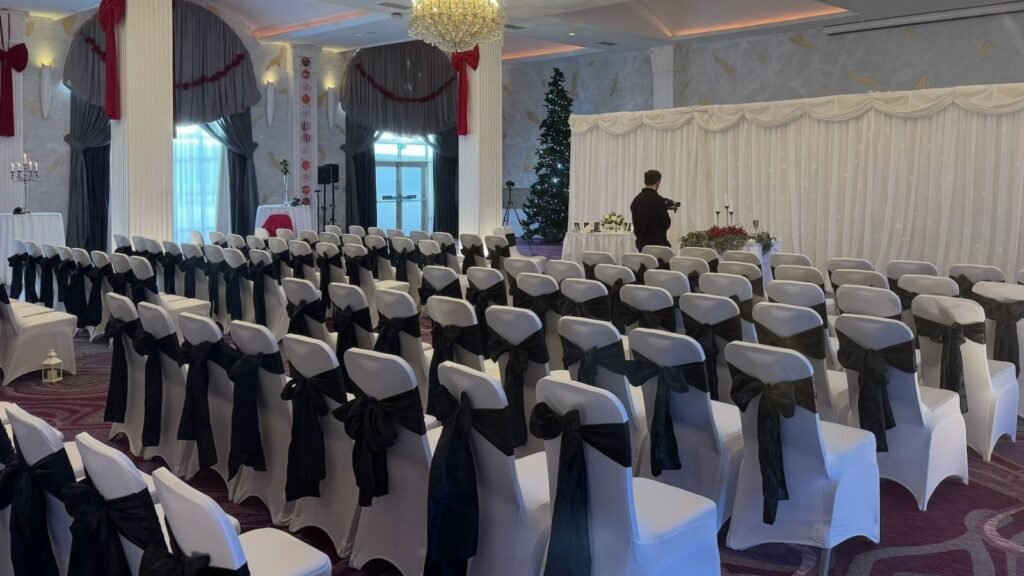
Most wedding venues are not “just” ceremony spaces or “just” dining rooms. The same room might host your ceremony at 2pm, be reset for dinner at 5pm, and become a dancefloor by 9pm. A garden used for photographs may also be a key access route for staff or suppliers.
This is why venues are cautious about using one space for too many purposes without enough turnaround time — or about outdoor ceremonies without a realistic indoor backup. It isn’t reluctance; it’s practical planning to avoid guests waiting while furniture is moved, rooms are reset, or schedules unravel.
Understanding this early helps couples design a day that flows naturally rather than one that constantly feels slightly behind.
Wedding Venues and Legal Marriage in Ireland: What Actually Matters (and What Doesn’t)
Why “We’ll Figure It Out Later” Causes Problems
Couples often assume decisions can wait: “We’ll decide closer to the day.”
Venues don’t have that luxury.
Contracts are agreed months in advance. Staff rosters, menus, hire items, room layouts, and supplier access times are planned well ahead. A late change to ceremony timing, guest numbers, or room usage rarely affects just one element — it ripples through the entire operation.
The 3-Month Notice Period Explained (Why It Catches So Many Couples Out)
When venues push for decisions by certain dates, it can feel rigid. In reality, they are protecting your day from last-minute pressure: rushed service, delayed dinners, under-staffed bars, or suppliers competing for the same space.
Seeing these deadlines as part of a shared plan — rather than arbitrary rules — completely changes how planning feels.
Why Ceremony Planning Feels So Confusing
The ceremony is where three worlds meet:
The venue, thinking about layout, capacity, sound, safety, and timing
The legal framework, managed by your solemniser
Your personal vision, shaped by music, entrances, readings, and meaning
If those perspectives don’t communicate clearly, confusion appears very quickly.
Venues are experts in hospitality — not marriage law. They may not know, for example, that legal declarations must be audible, that witnesses need clear positioning, or that the Marriage Registration Form requires a calm, stable signing moment.
Likewise, couples may not realise that a beautiful outdoor location has no viable backup, or that changing ceremony time affects the entire day’s flow.
When each party stays in its lane — venue on logistics, solemniser on legal requirements, you on priorities — the ceremony becomes smoother for everyone.
Wedding Venues and Legal Marriage in Ireland: What Actually Matters (and What Doesn’t)
What Actually Happens on the Wedding Day (Legally Speaking)
Why Prepared Couples Make Everything Easier
Good venues genuinely appreciate prepared couples. Prepared doesn’t mean controlling — it means clear and communicative.
Couples who:
confirm ceremony locations early
share accurate guest numbers on time
lock in key timings
flag special requests in advance
make it easier for the venue team to support them properly on the day.
That preparation benefits you as well. When expectations are written down and agreed, there are fewer surprises. You know what the venue provides, what you’re responsible for, and how the day will flow.
Instead of wondering whether you’re allowed to ask something, you can have direct, practical conversations about what’s possible — and what needs notice to make it work.
What to Ask Your Hotel or Venue Before Booking Your Irish Wedding
You can also download a Wedding Venue checklist here – Download Venue Checklist
Where a Solemniser Fits Into All of This
A registered solemniser sits at a useful intersection between your vision and the venue’s systems.
Their responsibility is to ensure the legal structure of the ceremony is correct: that the required declarations are spoken, witnesses can hear and understand what’s happening, the Marriage Registration Form can be signed calmly and correctly, and the chosen location is suitable from a legal perspective.
A good solemniser doesn’t simply arrive and read words. They help plan entrances, pacing, and readings — and, where needed, liaise with the venue about layout, timing, and sound. That means you don’t have to translate between legal requirements and venue logistics yourself.
When everyone understands their role, you can relax into the experience instead of managing it.
Working With a Solemniser: What Makes the Ceremony Feel Calm, Personal, and Complete
How This Understanding Changes Your Planning
Once you see a venue as a working system rather than just a beautiful backdrop, much of the stress falls away.
Requests and boundaries make sense. Questions feel normal rather than awkward. You become better at spotting when something needs advance planning rather than assuming it can be changed at the last minute.
That shift in mindset turns venue meetings into genuinely collaborative conversations: you bring your vision, the venue brings its systems, and your solemniser brings legal clarity. Together, you design a day that feels effortless on the surface because it is solid underneath.
From Here: Turning Understanding into Action
Understanding how venues work is the foundation. The next step is knowing what to ask — and when.
That’s where a focused venue-question checklist becomes powerful: it translates behind-the-scenes knowledge into clear, practical questions you can bring to your next venue visit.
When you approach your venue as a partner — with a sense of how their world works — planning becomes calmer, more grounded, and far less mysterious. That understanding doesn’t make your wedding feel less magical. It creates the conditions that allow the magic to unfold without unnecessary friction.
This article touches on themes explored more fully in my writing on ceremony and marriage, where the legal, practical, and human aspects of marriage are examined together.